
Grand Canyon Trip Planning: The Complete First-Timer’s Guide
Planning your first visit to the Grand Canyon can feel overwhelming. The park is massive, the viewpoints are endless, and the logistics can get confusing fast. This guide breaks down everything you need to know so your first trip is smooth, stress-free, and unforgettable.
Whether you’re coming for a weekend or a full adventure, this is your complete Grand Canyon trip planning resource.
When Is the Best Time to Visit the Grand Canyon?

The Grand Canyon is open year-round, but each season offers a different experience.
Spring (March–May)
Mild weather, fewer crowds, wildflowers beginning to bloom.
Summer (June–August)
Peak season. Expect warm days, busy viewpoints, and high demand for lodging.
Fall (September–November)
One of the best times to visit. Cooler temperatures, fewer crowds, and stunning colors.
Winter (December–February)
Quiet, snowy, and peaceful. Many overlooks remain open, creating a dramatic winter landscape.
One of the most important visiting the Grand Canyon tips is choosing your travel season based on what kind of experience you want: adventure, photography, solitude, or convenience.
How Many Days Do You Need?

For first-time visitors, the sweet spot is 2–3 days.
This allows you to:
-
Explore multiple viewpoints
-
Hike at least one trail
-
Experience sunrise or sunset
-
Visit nearby attractions without rushing
Trying to squeeze the canyon into one day often leads to missed highlights and unnecessary stress.
Where Should You Stay?

Many first-time travelers make the mistake of staying too close to the park, where lodging is limited, crowded, and expensive.
Smart travelers base themselves in Williams, Arizona — just 25 minutes from the South Rim — where you’ll find:
-
Easier access to food and services
-
More space and privacy
-
A calmer environment after long park days
-
Direct highway access to the canyon
Choosing the right location is one of the most important parts of successful Grand Canyon trip planning.
What Should You See First?
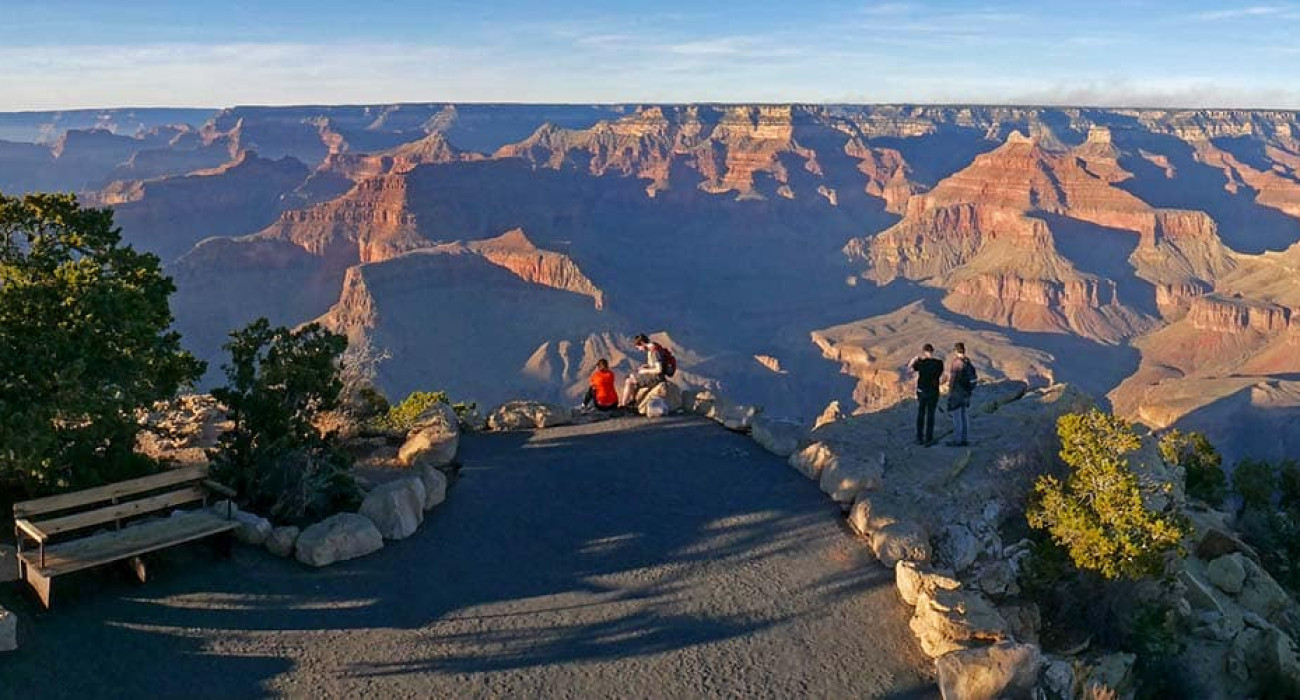
Start with the South Rim. It offers the most iconic views and the greatest number of accessible overlooks.
First-timer must-see stops:
-
Mather Point
-
Yavapai Point
-
Desert View Watchtower
-
Grandview Point
-
Hermit’s Rest Scenic Drive
One of the best visiting the Grand Canyon tips is to arrive early in the morning or stay late for sunset when crowds thin and lighting is ideal.
Best Beginner Hikes
You don’t need to be an extreme hiker to experience the canyon on foot.
Great first hikes:
-
Rim Trail – Flat, scenic, and easy
-
Bright Angel Trail – Go down as far as you feel comfortable, then turn back
-
South Kaibab Trail (Ooh Aah Point) – Short but stunning
Always remember: hiking down is optional, hiking up is mandatory. Pace yourself.
What Should You Pack?
The canyon’s weather changes quickly, even in summer.
Essentials:
-
Comfortable hiking shoes
-
Water (more than you think you need)
-
Sunscreen and hat
-
Light jacket (even in warm months)
-
Snacks or meals for long days
Hydration is critical. One of the most important visiting the Grand Canyon tips is to drink water continuously, even if you don’t feel thirsty.
Nearby Attractions Worth Adding
A well-planned trip includes more than just the canyon itself.
From Williams, you can easily visit:
-
Bearizona Wildlife Park
-
Route 66 Historic Downtown
-
Grand Canyon Railway
-
Flagstaff & Coconino National Forest
These additions turn a simple visit into a complete Northern Arizona adventure.
Final Grand Canyon Planning Advice
Your first Grand Canyon trip should feel exciting, not exhausting. Give yourself time. Stay somewhere peaceful. Start early. Slow down. Let the views sink in.
When done right, Grand Canyon trip planning creates not just a vacation — but a memory you’ll carry for life.